If you’ve ever stared at a map and felt like Iceland and Greenland need to swap their name tags, you’re not alone. Iceland is lush and surprisingly mild. Greenland is a frozen giant. Yet these names weren’t mistakes or tricks. They were chosen by Vikings who named places the way they saw them in the moment. Sometimes this was during a warm summer, sometimes during a soul-crushing winter, and sometimes while trying to convince people to follow them into the unknown. Why is Iceland green and Greenland ice?
This quick answer is that Iceland is green because the Gulf Stream warms the island, creating mild coastal temperatures and bright green summer landscapes. Only about 10 to 14 percent of Iceland is covered by glaciers. Greenland, meanwhile, was named in AD 982 by Erik the Red, who arrived during a warmer period when southern Greenland really did have green grazing land. Today, roughly 80 percent of Greenland is covered by a massive ice sheet, so the names feel backwards even though they made sense at the time.
How Iceland Got Its Name
Before Iceland became Iceland, it had two earlier names. Norse explorer Naddador called it Snæland, meaning Snow Land. Then Garðar Svavarsson came along and renamed it Garðarshólmur. But the name that lasted came from Hrafna-Flóki Vilgerðarson, who had one of the roughest first impressions possible.
Flóki arrived with livestock, optimism, and plans. Winter arrived with ice, disappointment, and disaster. His animals died. His settlement didn’t survive. When he climbed a mountain for a clearer view of his future, all he saw was a fjord full of drift ice. That frozen view was enough for him to declare the island should be called Iceland. One harsh winter and a frustrated Viking gave the island a name that still confuses people today.
- Related reading: Why is Iceland called Iceland?
Greenland
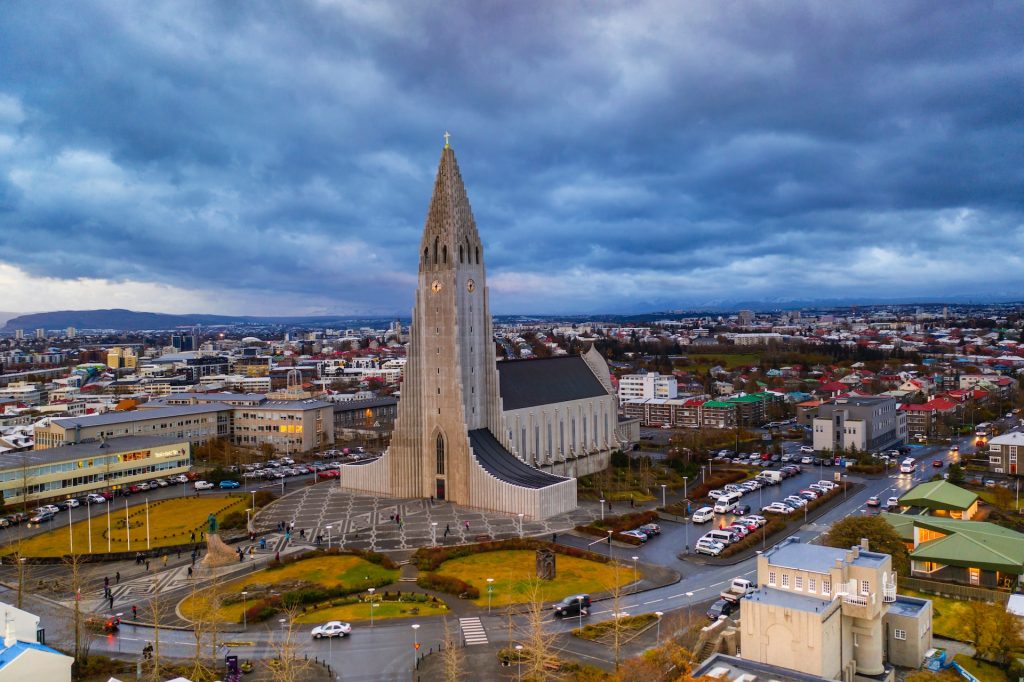
Iceland
How Greenland Got Its Name
Greenland’s name comes from Erik the Red, who was exiled from Iceland for murder and sailed west in search of a fresh start. He reached Greenland during the Medieval Warm Period, a time when the climate in the North Atlantic was milder. Southern Greenland had green valleys, grassy slopes, and land that looked far more farmable than it does today.
Erik understood the power of a good name, so he called it Greenland, hoping it would attract settlers. And it did. People followed him across the sea, encouraged by the promise of a fertile new frontier.
But by the 14th century, temperatures dropped sharply. Sea ice expanded, farms failed, and the Norse eventually abandoned their Greenland settlements. The warming phase ended, the ice returned, and the name stayed, leaving future generations with the most ironic place-name situation in Europe.
Why is Iceland Green?
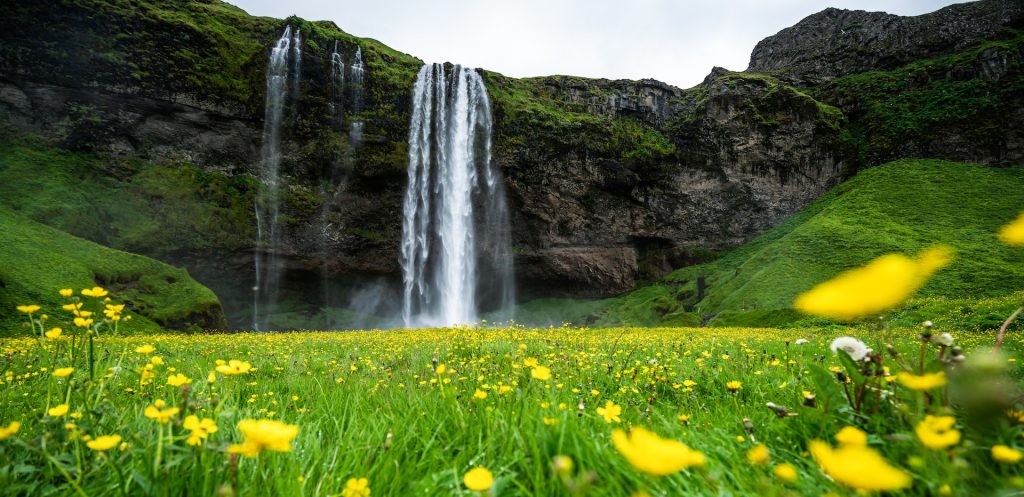
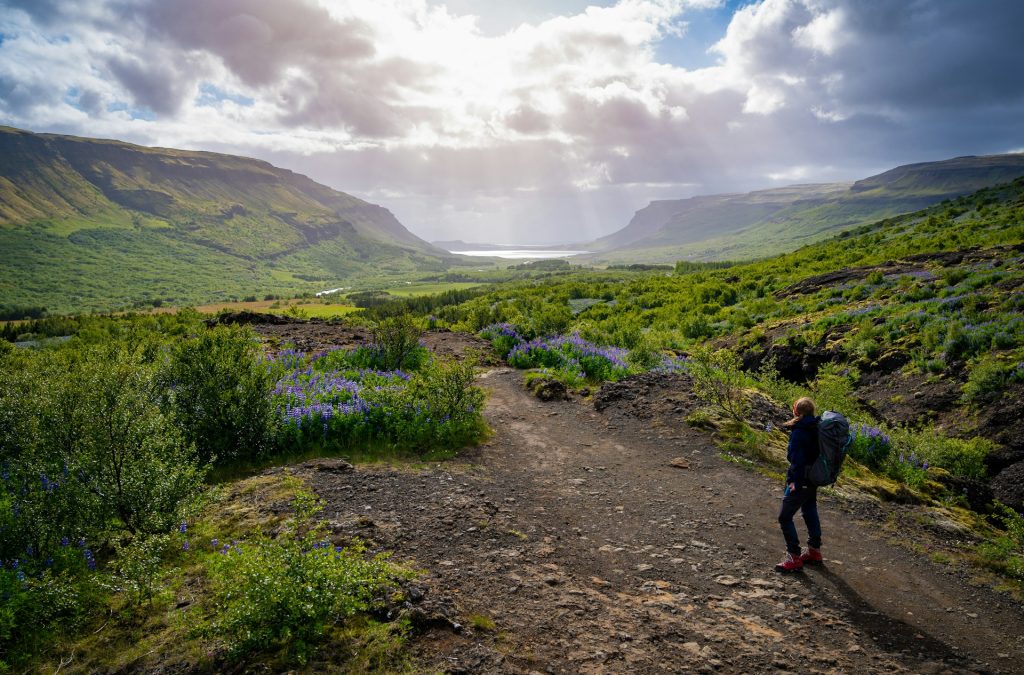
Despite its icy name, Iceland sits in the path of the Gulf Stream, which carries warm water all the way from the tropics into the North Atlantic. That warm current softens winter temperatures and creates conditions for a surprisingly long growing season. During summer in Iceland, the country turns intensely green. Lava fields are coated in moss. Meadows fill with wildflowers. Farmland thrives along the coasts. And while Iceland’s glaciers are impressive, they cover only a small part of the island. The rest bursts into color the moment the snow retreats.
So yes, Iceland has ice. But green landscapes are one of its biggest surprises.
Why Greenland Is Mostly Ice
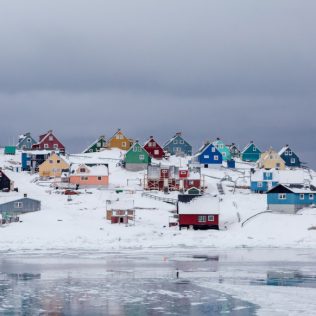
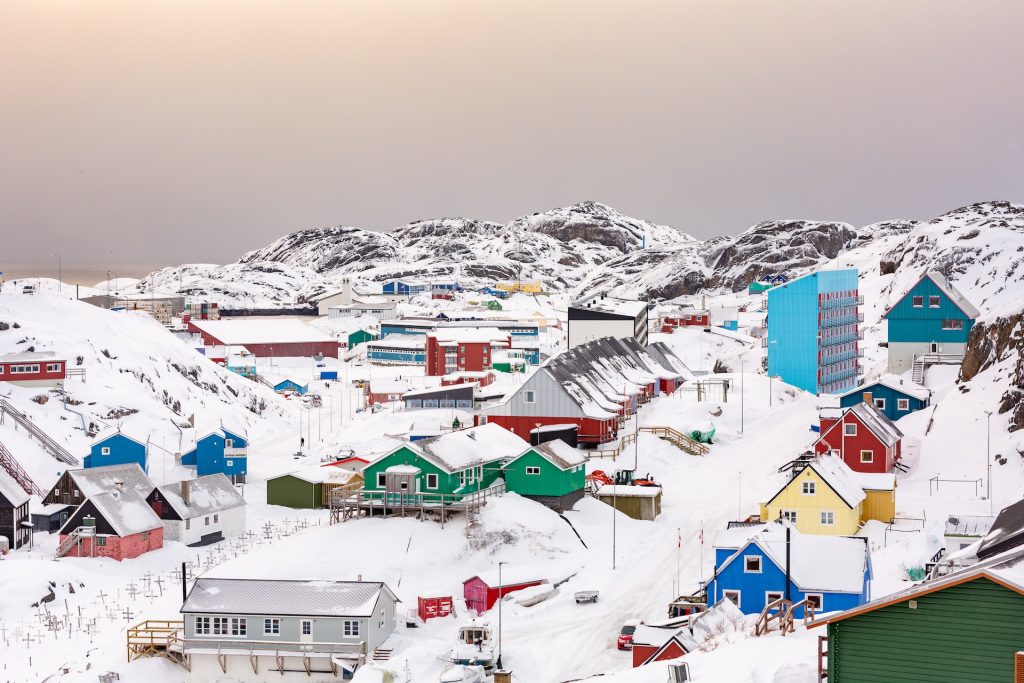
Greenland, on the other hand, sits farther north and gets none of Iceland’s warm ocean influence. Instead, the island is shaped by the East Greenland Current, which pulls icy Arctic water along the coastline and keeps temperatures extremely low.
The island is dominated by an enormous ice sheet that covers around 80 percent of its landmass and reaches up to 3 kilometers thick. This ice has been building for hundreds of thousands of years and barely melts, even in summer. Only the edges of Greenland experience brief seasonal thawing before the cold takes over again. Even with modern warming, Greenland remains one of the coldest inhabited places on Earth, and its vast ice sheet is not going anywhere anytime soon.
How Climate Shapes Culture
Climate doesn’t just shape landscapes. It shapes lifestyles, traditions, and the identity of the people who live there. Greenlanders are experts at living with ice. Their culture developed around dog sledding across frozen plains, ice fishing in winter darkness, and navigating vast stretches of Arctic wilderness. Hunting on sea ice, moving with the seasons, and building community traditions around the extremes of the environment are part of daily life. Their stories, music, and art carry the rhythm of the Arctic.
Iceland tells a very different story. With geysers bursting from the earth, hot springs everywhere, and green fields stretching through summer valleys, Icelanders grew up surrounded by dramatic, dynamic nature. The sagas, some of the world’s oldest written stories, are rooted in this landscape of volcanoes, storms, and shifting earth. Even today, traditions like the annual sheep roundup, geothermal swimming culture, and music inspired by the country’s unique soundscape show how nature shapes Icelandic life.
Two countries, two climates, two cultures, each shaped by the environment they call home.
Myth vs Reality: Did Iceland and Greenland Switch Names?
A popular myth says the Vikings switched the names on purpose. Iceland was supposedly named Iceland to keep people away, while Greenland was named Greenland to fool people into settling there. It’s a fun story, but not a true one.
What really happened is simple. Flóki saw ice. Erik saw green valleys. Both named the land exactly how they experienced it. The climate changed later, making the names feel reversed long after the Vikings were gone.
Frequently Asked Questions
-
- Is Greenland colder than Iceland?
Yes. Greenland sits farther north and lacks the warming effect of the Gulf Stream, so its winters are much harsher.
- Is Greenland colder than Iceland?
-
- What is the irony between Iceland and Greenland?
Iceland is greener than you’d expect, while Greenland is far icier than its name suggests. The irony comes from climate shifts, not deliberate trickery.
- What is the irony between Iceland and Greenland?
-
- Why didn’t Iceland and Greenland switch names?
Because each name matched what explorers saw at the time. The climates later changed, making the names feel mismatched.
- Why didn’t Iceland and Greenland switch names?
-
- Was Greenland green when the Vikings arrived?
Southern Greenland was significantly warmer and greener during the Medieval Warm Period.
- Was Greenland green when the Vikings arrived?
-
- Why is Greenland no longer green?
Temperatures dropped after the 14th century, expanding sea ice and shortening the growing season.
- Why is Greenland no longer green?
-
- Does Greenland have mosquitoes while Iceland doesn’t?
Correct. Greenland has mosquitoes in summer. Iceland has none because its climate and water systems don’t support them.
- Does Greenland have mosquitoes while Iceland doesn’t?
-
- Does Greenland experience 24 hours of darkness?
Northern Greenland has polar night, with weeks of continuous darkness each winter.
- Does Greenland experience 24 hours of darkness?
-
- What language do they speak in Greenland?
The main language is Greenlandic, also called Kalaallisut, with Danish also widely used.
- What language do they speak in Greenland?
-
- What ethnicity makes up most of Greenland?
Around 90 percent of Greenland’s population is Inuit.
- What ethnicity makes up most of Greenland?
Exploring Iceland’s Green Landscapes?
Iceland’s mix of green valleys, roaring waterfalls, active volcanoes, and easily accessible glaciers makes it one of the most rewarding places to explore in the world. The best way to experience it all is by renting a car and taking your time on the Ring Road or heading out on scenic drives to Iceland’s most iconic locations.
Book your rental car early with Hertz Iceland to get the best availability and start planning your adventure.