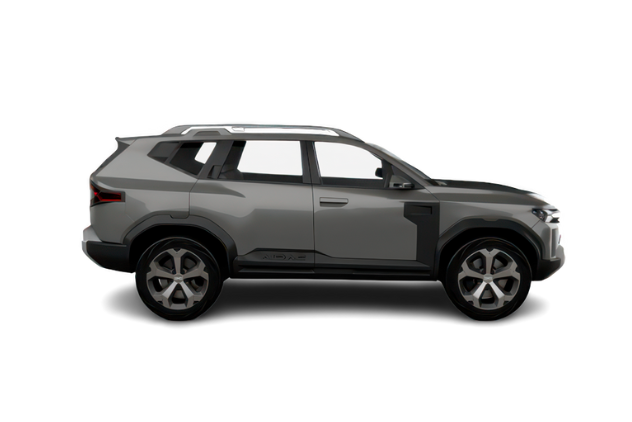
Dacia Bigster AWD
Manual | 4×4. A roomier step up from the Duster, with extra space for longer trips and budget Highland access.
Seats 5
Luggage 3 Large

Iceland attracts travellers with its dramatic volcanic landscapes and cascading waterfalls, but its deep historical heritage holds an equally powerful allure. From the ancient open-air assemblies of the Viking Age to the remote turf houses of the early settlers, the island tells a story of survival, democracy, and exploration. To truly appreciate this history, you need the freedom of a self-drive road trip. Many of the most iconic Icelandic historical sites sit far apart, scattered across the wind-swept shores of the South, the deep valleys of the West, and the rugged cliffs of the North. We design this blog post to help you plan the perfect route to explore these cultural treasures in your own rental car.
Renting a car allows you to explore at your own pace, skipping the rigid schedules of tour buses. You can stand where legendary saga heroes fought, walk the paths of medieval bishops, and touch the stone foundations of 10th-century longhouses. Whether you want to explore ancient Viking ruins or peaceful cultural landmarks, this planner covers everything you need to find the best Iceland historical sites. Let’s prepare your rental car, pack your maps, and embark on an unforgettable journey through the historical places in Iceland.

Before you start your car and head onto the Ring Road, you should understand the distinct eras that shaped the Icelandic nation. Most of the information we know is from two medieval texts: the Landnamabok (Book of Settlements) and the Islendingabok (Book of Icelanders). These texts were written in the 12th century but were based on oral storytelling and give insights into early settlers.
Over the centuries, Iceland transitioned through dramatic religious conversions, Norwegian and Danish rule, and severe natural disasters, before finally gaining independence in 1944. Each era left unique markers behind, from the coastal trading posts of the Westfjords to the ancient bishoprics of the South Coast.
A self-drive trip lets you connect these dots chronologically or geographically between famous Icelandic historical sites. By planning your route carefully, you can experience a seamless journey through time, observing how a resilient population adapted to an unforgiving environment.
To make your trip easier to plan, we categorise the historical landmarks of Iceland into three distinct groups.
Understanding these distinctions helps you appreciate the diverse Icelandic historical sites you will encounter along your self-drive route. The table below highlights key sites across different regions to help you create the perfect itinerary to visit each one.
| Region | Historical Landmark | Site Type | Approx. Driving Time from Reykjavik |
| South Iceland | Þingvellir National Park | Viking Assembly & Geologic Site | 45 minutes |
| West Iceland | Reykholt & Snorrastofa | Medieval Cultural Centre | 1 hour 30 minutes |
| West Iceland | Eiríksstaðir (Haukadalur) | Viking Longhouse Reconstruction | 2 hours 15 minutes |
| North Iceland | Glaumbær Turf Farm | 18th-Century Cultural Landmark | 3 hours 45 minutes |
| East Iceland | Skriðuklaustur Ruins | 16th-Century Monastic Ruins | 8 hours (via Ring Road) |
Exploring the history of the island of fire and ice requires a reliable strategy and a comfortable vehicle. When you begin your journey, you will most likely start in Reykjavik, the bustling gateway to the country. Renting a car directly at Keflavik Airport allows you to drive straight to the capital of Iceland, where you can explore its vibrant cultural centres and historic harbour. The capital serves as an excellent starting point because it hosts some of the country’s most significant cultural institutions.
Before hitting the open road, we highly recommend stopping at some of the museums to view actual archaeological finds, clothing, and ancient longhouse foundations. These collections provide vital context for the Iceland historical sites you will visit later. Our recommendations for museums include:
| Recommended City Museum | Core Focus & Visitor Value |
| The Settlement Exhibition | An exhibition of the settlement of Reykjavík, detailing archaeological findings of early settlers. |
| Perlan | A discovery of the wonders of Icelandic nature full of immersive and dynamic experiences. |
| Arbaer Open Air Museum | This is Iceland´s largest open-air museum, housing a collection of historical buildings and ancient artefacts. |
| National Museum of Iceland | A chance to explore the fascinating history of the fire and ice nation from the settlements to the present day. |
| Icelandic Museum of Natural History | A delicate and detailed communication of Icelandic local and global context, with both geographical and zoological information. |
To make your planning easier, here you have a map with the best museums for you to see:
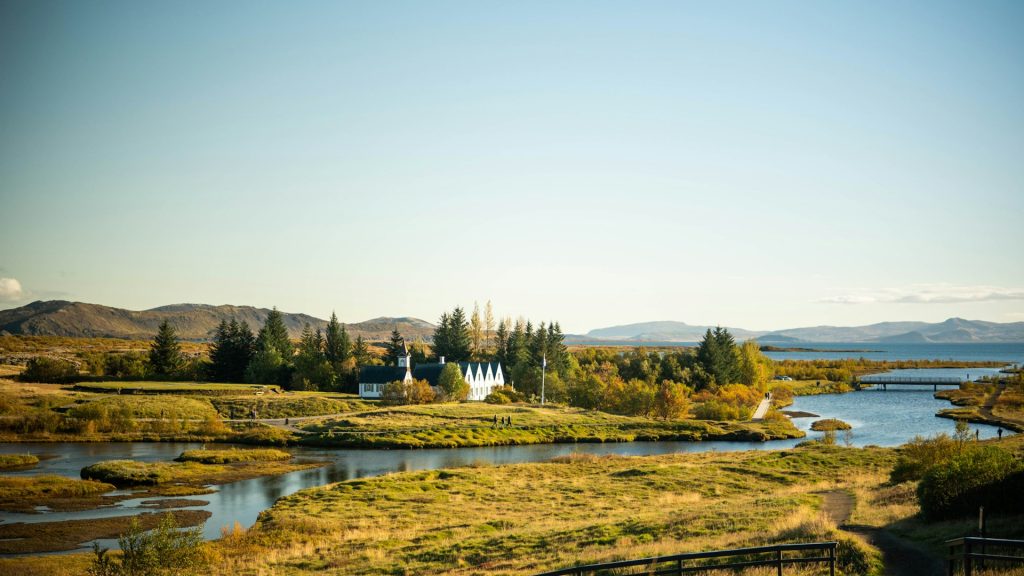
As you leave the city behind, you will encounter the legendary Golden Circle route. This route is a route for sightseeing three of the most visited landmarks: Þingvellir National Park, Geysir Geothermal Area, and Gullfoss waterfall.
Standing on the wooden pathways of the park connects you directly to the 10th-century chieftains who gathered here annually. For an in-depth companion to navigating this specific geographical marvel, using a dedicated Hertz Iceland thingvellir National Park travel guide will enrich your historical walk through the continental rift. planning your road trip around major events in Iceland, such as the annual Viking Festival in Hafnarfjörður, will elevate your historical adventure with live reenactments and traditional crafts.
Finally, while walking through ancient ruins, knowing the story behind Viking symbols and meanings helps you decipher the cultural heritage carved into local monuments and memorial stones. These tools will transform your road trip into an immersive historical odyssey.
The southern and western regions of the island contain some of the best historical places in Iceland. You can easily integrate these primary cultural landmarks into a smooth self-drive loop:
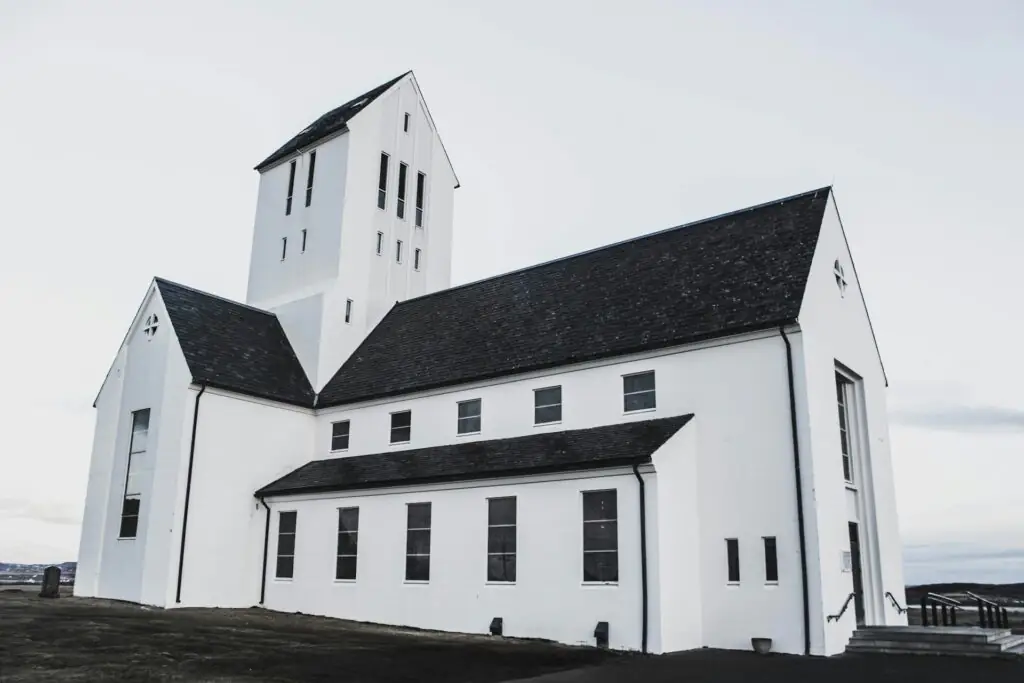
If you want to focus your road trip specifically on the age of Norse exploration, you will find several incredible Iceland historical sites that feature Viking-era longhouses.
A self-drive itinerary provides the best way to reach these ancient sites, as many of them lie tucked away in remote valleys and coastal fjords. Driving from one excavation to another gives you a sense of the vast distances the settlers had to travel to trade, feast, or attend regional assemblies. As you navigate these coastal routes, you will gain a profound respect for the seafaring skills of the Norse chieftains. Exploring these Icelandic historical sites with your own vehicle means you can take your time, photograph the ruins, and enjoy the dramatic natural backdrops without rushing.
To help you plan your journey of Icelandic historical sites, we have organised the top Norse stops by region. Exploring these regions by car allows you to experience the sheer scale of the island’s settlement history, pairing magnificent views with deep mythology:
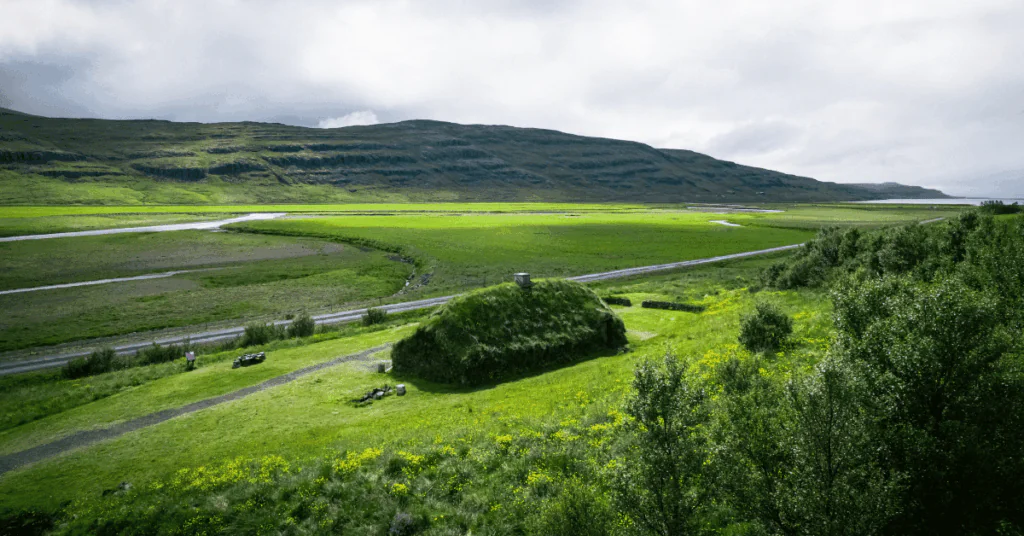

These Eastern Iceland historical sites offer magnificent coastal views alongside rich mythology. Here is a list of must-visit Norse sites to add to your itinerary:
Combining these diverse landmarks into a cohesive journey requires careful route planning. Fortunately, the layout of the country’s road system makes it easy to design a self-drive history tour. The Ring Road acts as a main artery, while well-maintained secondary roads branch off into historical valleys and historic coastal towns. By planning your stops, you can minimise your driving hours while maximising your time spent exploring ruins and museums.
To get the most out of your trip, you should match your vehicle to the specific route you choose. While standard paved roads lead to many Iceland historical sites, reaching some of the more remote turf houses or archaeological digs in the North and Westfjords might require navigating gravel roads. We offer a wide range of vehicles, ensuring you have the perfect car for your chosen itinerary. Below, we outline three suggested routes that cater to different trip lengths and travel styles.
Manual | 4×4. A roomier step up from the Duster, with extra space for longer trips and budget Highland access.
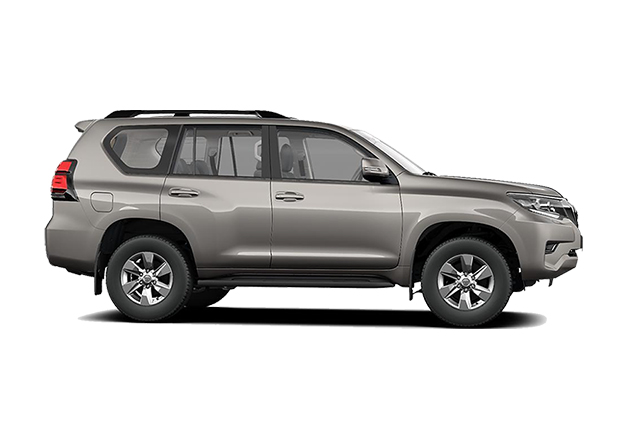
Automatic | 4×4. High ground clearance and strong suspension for full Ring Road comfort and tough terrain.

Long Range | Automatic | 4×4. Premium fully-electric AWD with extended range for quiet, smooth paved road touring.
*Fleet availability varies by season. F-road certification applies to designated models like the Land Cruiser and Bigster; EV 4x4s are strictly for paved/approved gravel routes.
Since we know it can be frustrating to plan your itinerary with all of the different must-see locations, we have created 3 different itineraries depending on your time availability to enjoy the most Icelandic historical sites possible:
| Itinerary Route | Recommended Duration | Core Focus & Key Stops |
| 1-Day Golden Circle Express (The Power Core) | 1 Day | Designed for travelers with limited time. Start early from Reykjavík and drive directly to Þingvellir National Park to stand on the site of the ancient parliament. Head south to explore the Skálholt Bishopric memorial church and underground museum. Complete your day by visiting Geysir and Gullfoss waterfall. |
| 3-Day Saga Lands & Strongholds (The West & Northwest) | 3 Days | Perfect for a more in-depth experience covering core saga territories. • Day 1: Reykjavík to Borgarnes (Settlement Centre) and Reykholt. • Day 2: Journey north to the Haukadalur valley to visit Eiríksstaðir. • Day 3: Drive the Vatnsnes Peninsula to view the fortified volcanic plug at Borgarvirki. |
| 10-Day Ring Road Epic (The Complete Settlement Loop) | 10 Days | The ultimate adventure wrapping around the entire country. This layout allows you to expand your route into a longer 10-day Iceland self-drive itinerary to completely experience the turf farms of the North, ancient monastic ruins of the East, and coastal heritage sites of the South at a safe pace. It gives you a deep appreciation for the massive geographic challenges early settlers faced. |
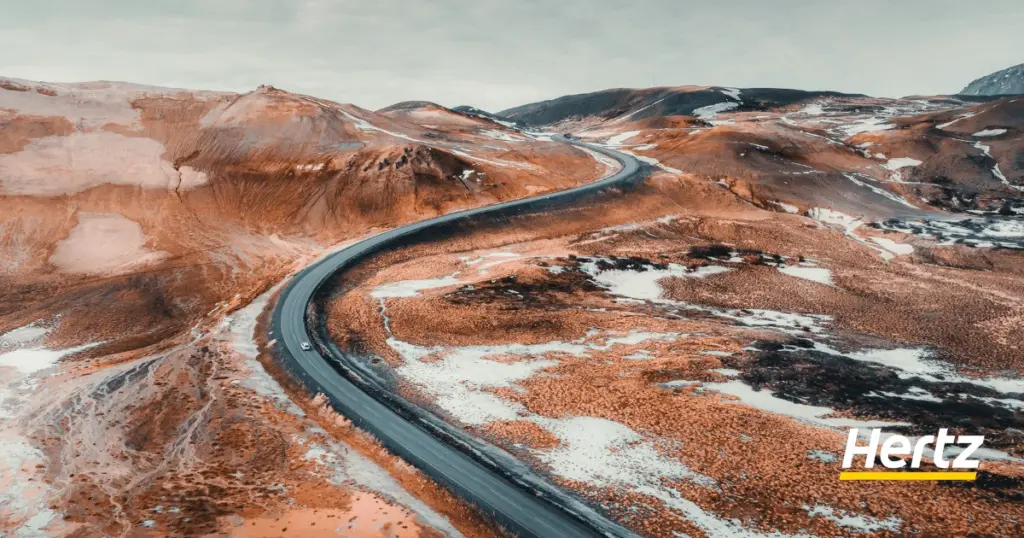
Choosing the right rental vehicle is crucial for a successful self-drive exploration of Iceland’s historical sites. The quality of your journey depends heavily on your comfort and safety on the road. Selecting a premium choice from our robust lineup of cars for Iceland adventures ensures you have a vehicle engineered to handle the unpredictable shifts of the highland perimeter with ease.
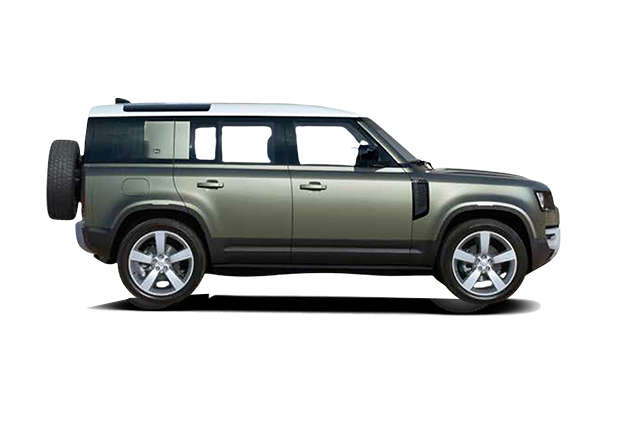
Automatic | 4×4. The definitive Highland-ready full-size SUV, combining serious 4WD capability with a comfortable cabin.
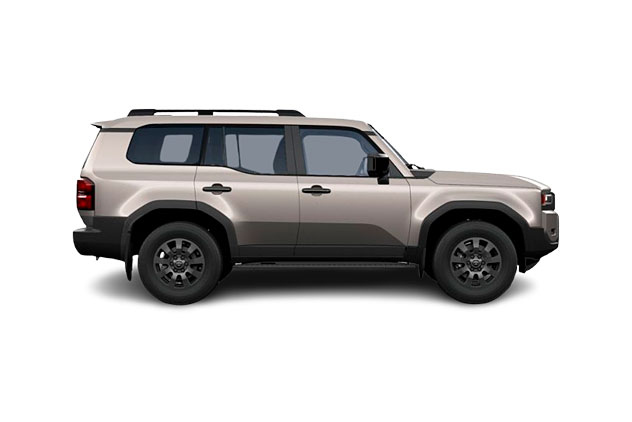
Automatic | 4×4. The latest generation Land Cruiser, with the largest luggage capacity in our full-size range.

Automatic | 4×4. Generous space for families, with the traction to handle F-road tracks when open.
*Fleet availability varies by season. Always verify F-road openness on road.is before traveling into Highland areas.
For your ease, we have created the following table detailing the differences between Economy vs. 4×4 SUV suitability across gravel valley paths, turf farm networks, and seasonal subarctic weather patterns so you can assess which one to choose:
| Vehicle Category | Recommended Historical Sites | Seasonal Suitability | Gravel Path & Valley Performance | Local Driving Insight |
| Economy / Compact Sedan | • Þingvellir National Park• Skálholt Bishopric• Borgarnes Settlement Centre | Summer Months Only (June – September) | Limited. Not suitable for rough, unpaved secondary tracks or steep valley approaches. | Ideal for fuel-efficient cruising along the paved Golden Circle and main Ring Road circuits. Highly prone to front undercarriage damage if driven on rugged highland perimeters. |
| Advanced Electric AWD | • Þingvellir National Park• Reykholt Medieval Estate• Museum Circuits | Summer & Light Shoulder Months | Moderate. Handles light, well-packed gravel roads leading to major cultural sites. | Delivers quiet efficiency and great road stability on paved paths. Always cross-reference your route with active charging stations before embarking on long gaps between landmarks. |
| Mid-Size 4×4 / SUV | • Eiríksstaðir Viking Longhouse• Glaumbær Turf Farm• Borgarvirki Volcanic Fort | Year-Round(Mandatory October – May) | Excellent. Elevated chassis protects against stone chips and handles packed gravel valleys with ease. | Highly recommended for the unpredictable shifts of the subarctic shoulder seasons. Provides the necessary traction and ground clearance required to confidently cross gravel transitions in the North and Westfjords. |
| Large / Premium 4×4 SUV | • Remote Eastfjords Excavations• All Long-Distance Ring Road Loops | Year-Round(Maximum Safety Buffer) | Superior. Engineered to navigate deep volcanic ruts and severe washboarding smoothly. | Best suited for large families or photography groups carrying heavy gear sets. The heavy chassis offers the best protection against intense coastal wind gusts when bypassing deep fjords. |
Local Driving Expert Tip: When embarking on any historical self-drive route, especially during the autumn, winter, or early spring shoulder seasons, always consult safe.hertz.is to check real-time road conditions, seasonal closures, and active travel alerts before you turn the key.
The ancient longhouses, fortified volcanic strongholds, and historic turf farms of Iceland are best explored on your own schedule. Avoid the rigid timelines of tour buses and uncover the island’s deep pagan history at your own pace. Book your ideal rental vehicle with us today to secure the perfect model for your historical route, complete with unlimited mileage and premium Nationwide Support via our 24/7 emergency hotline across the entire Ring Road.
When planning a historic self-drive tour, you might have several questions about logistics, road safety, and locations. To help you prepare for your journey, we have compiled answers to the most common questions.
The top destinations are Þingvellir National Park (the ancient parliament site), Glaumbær Turf Farm in the North (traditional rural architecture), and Reykholt (the medieval home of writer Snorri Sturluson). Renting a car allows you to visit these spread-out Icelandic historical sites comfortably and at your own pace.
You can explore Eiríksstaðir in West Iceland, featuring a reconstructed living-history longhouse, and The Settlement Exhibition in Reykjavík, which displays actual 10th-century foundations excavated beneath the city streets. In the Westman Islands, you can also tour Herjólfstown, a replica of an early Norse farmstead.
Yes, driving is the best way to visit the island’s heritage landmarks because public transportation to remote saga sites and turf houses is impractical. A self-drive trip gives you the ultimate flexibility to explore remote coastal ruins, and we provide the reliable, modern vehicles needed to make your journey safe and easy.
We recommend at least 3 to 5 days to cover the Golden Circle and the historical valleys of West Iceland. If you want to travel the entire Ring Road to see the northern turf farms and eastern monastic ruins, you should allocate at least 10 days to drive safely without rushing.
No, a standard 2WD car works perfectly for major landmarks along the paved Ring Road and Golden Circle in the summer. However, if you plan to explore gravel tracks in the Westfjords, navigate the rugged North, or travel during the winter, we strongly recommend renting a 4×4 SUV for superior traction and safety.